
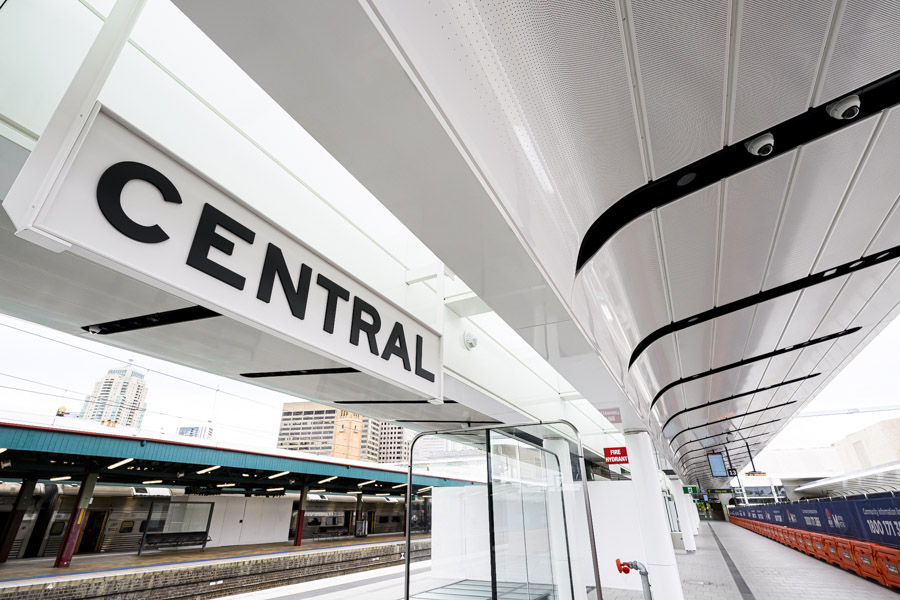
Sydney Metro City and Southwest — Central Station Main Works
Industry: Civil and Infrastructure, Rail, Government
Duration: 4 years
Period: 2020-2024
Scope: Storm Water drainage and boring.
The storm water drainage network at Central Station was identified to be blocked at multiple drainage lines which caused severe flooding issues within the station during heavy rain events. Blockage of drainage lines were primarily caused by grout entering the old drainage network and a build-up of material over a long period of time. The Scope of Works included the removal of drain blockages through robotic cutting methods; grinding and UHPW, pipe relining, post-completion jet blasting and CCTV camera works and investigation reporting to obtain as-builts of completed works.
The client required critical underground works within the live rail corridor. As part of these works, Draintech Solutions was contracted under Subcontract SK51A-00157 to undertake grout removal, pipeline clearing, and relining between Pit A–D and Pit D–E.
This project presented unique challenges including:
- Grout deposits with an estimated compressive strength of 90 MPa obstructing terracotta pipelines.
- Complex confined space entry at 5.5m deep pits.
- Work conducted between live tracks (18 & 19) within Sydney Trains’ operational network.
- Stringent environmental, noise, and safety requirements under Sydney Metro’s approvals framework.
Testing and Revised Approach
Draintech conducted controlled trials simulating site conditions using BluCem HE80 in a 375mm pipe. Two robotic techniques were tested:
- Ultra High-Pressure Water (UHPW) Robotics
- Using an IST PC200 robot with a 32,000 PSI water jet (17L/min).
- Productivity: 80–100mm per hour.
- Pneumatic Chisel Attachment
- Mounted to the IST PC200 robot.
- Productivity: 60–80mm per hour.
The most effective approach was a hybrid methodology:
- UHPW robotics used to safely core the grout without damaging the host pipe.
- Pneumatic chisels used to remove the outer deposit layer.
This revised methodology provided an achievable productivity rate of ~500mm per day.
Pit A–D and Pit D–E
- Pipe Material: Terracotta (150mm diameter).
- Blockage Removal: Robotic boring and grout extraction.
- Relining: Structural relining of the cleared pipes.
- Confined Space Entry: Trained crews and rescue gear deployed.
- Environmental Controls: Dust suppression, noise blankets, ERSED controls.
- CCTV Inspection & Reporting: Post-completion surveys to WSA 05-2008 and Sydney Trains T HR CI 12130 MA standards.
- Mapping: Invert levels and pit entry positions recorded.
- Jet Blasting: Final jet cleaning of all lines.
- Pit A–D Works: 6 June 2022 – 16 September 2022
- Pit D–E Works: 17 September 2022 – 27 October 2022
- Shift Structure: 11 shifts per week (6 day shifts, 5 night shifts).
Trials confirmed a minimum productivity of 200mm grout removal per shift, underpinning programme feasibility.
- All personnel RIW (Rail Industry Worker) accredited.
- Confined space rescue and safety systems in place.
- No lone working permitted.
- Adherence to Sydney Metro Industry Curriculum (SMIC) and project-specific noise/vibration management requirements.
Draintech Solutions successfully developed and implemented an innovative revised methodology that balanced productivity with asset protection. The works ensured the complete restoration of critical drainage infrastructure beneath Sydney Metro’s operational rail network.
Key achievements included:
- Safe removal of high-strength grout without host pipe damage.
- Concurrent grout removal and relining to maximise efficiency.
- Compliance with Sydney Metro, Sydney Trains, and WSA standards.
- Delivery within the programmed timeframes despite challenging conditions.
This case study highlights Draintech Solutions’ ability to innovate under pressure, integrate robotic technology, and deliver complex underground remediation works in sensitive live rail environments.